Home/Articles

Articles

Rigorous inquiries into philosophy, culture, science, and the structures shaping modern consciousness.

Introduction The Current State of Greek Tragedy Interpretation: Navigating Cross-Cultural and Cross-Temporal Challenges Much contemporary scholarship on ancient Greek tragedy has grappled with the challenges of cross-cultural and cross-temporal interpretation (Meineck, 2012). As a legacy of Western academic traditions, the prevailing view has long been that concepts and philosophical ideas can be easily translated and …

1. Introduction to Transhumanism and its Goals Transhumanism is a movement—popular with and sponsored by tech elites and others in the global superclass—that advocates the technological “enhancement” of human beings, largely through biotechnology and AI. The stated goal of the movement is to engineer the posthuman, a super-enhanced organism or species that can no longer …

A name is to be given to an attitude that does not cavort politically or philosophically on the spectral shores of left or right-wing interests, and which is also standing at a distance, with a quiet smile, from the hustle and bustle of the centre stream. Touched by the pathos of distance, she sees herself …

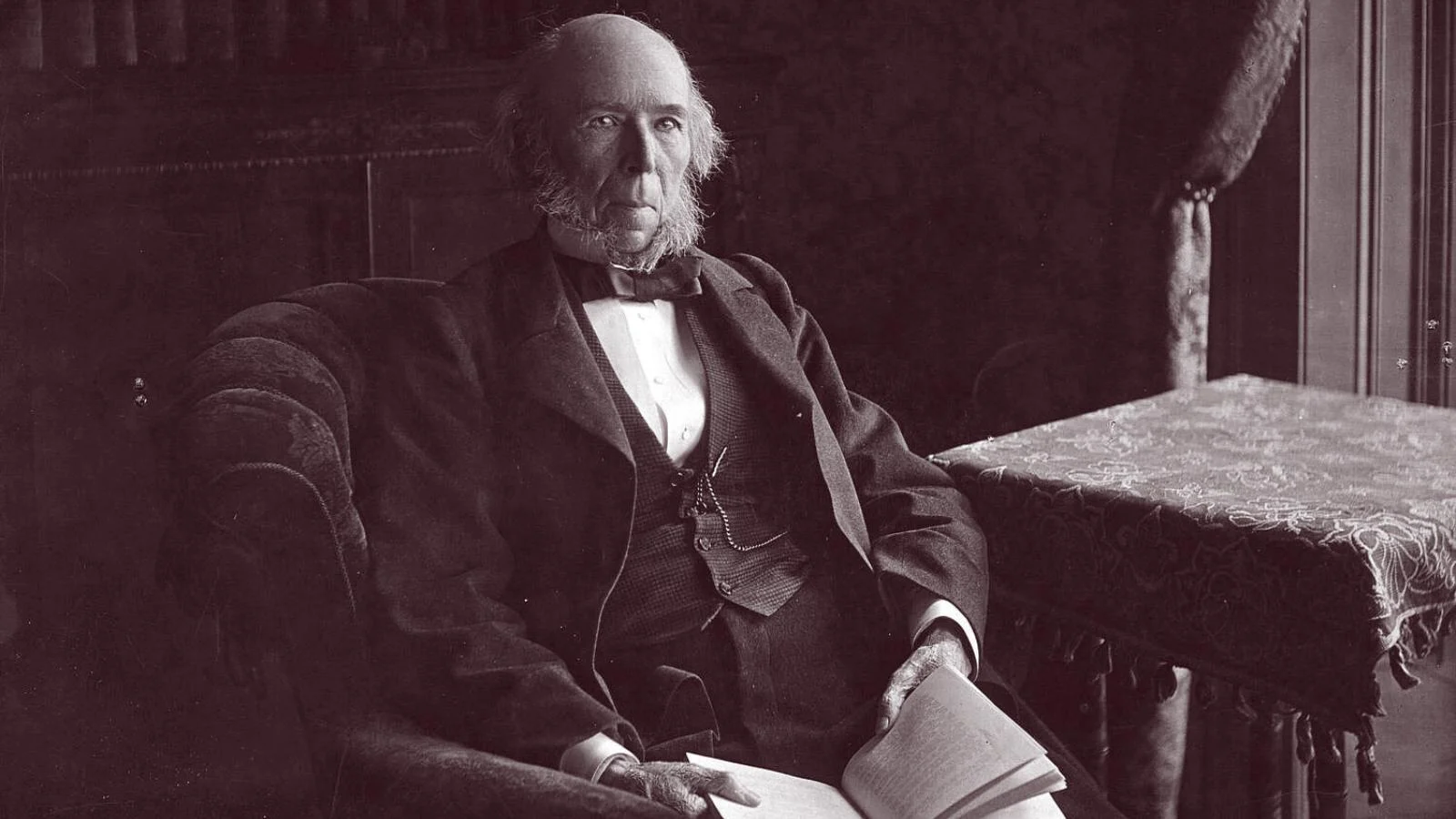
This will be the first in a series covering the Victorian age thinker and proto-social scientist Herbert Spencer. Introduction Every so often a philosopher emerges who has a long-lasting effect on the ideas and concepts of experts and common people alike.  Herbert Spencer is one of those rare individuals who contributed groundbreaking ideas during his …

Baron Gottfried Wilhelm von Leibniz (1646-1716) was a remarkable man. During his life, he made seminal contributions to a wide variety of fields of study, including mathematics, physics, technology, philosophy, theology, philology, politics, library science, and others. Alongside Sir Isaac Newton, he is credited with the invention of calculus, in addition to statistics and binary …

Introduction The Greek polis and the Roman civitas represent some of the most distinctive forms of political and social organization in history. Yet, they are often misunderstood when examined through the lens of the modern state. Modern conceptions of the state—centralized, bureaucratic, and sovereign—emerged from the intellectual revolutions of the Renaissance and Enlightenment. Thinkers like …

Join our Newsletter

Stay informed with regular updates and content.