In the often ambiguous and dark corridors of intellectual history, the specter of one philosopher looms over lesser-known and essential thinkers alike, regardless of affiliation and school: Friedrich Nietzsche On the topic, Daniel Tutt presents himself as both a hermeneutical exorcist and an archaeologist. His recent book, How to Read Like a Parasite: Why the …
In the often ambiguous and dark corridors of intellectual history, the specter of one philosopher looms over lesser-known and essential thinkers alike, regardless of affiliation and school: Friedrich Nietzsche
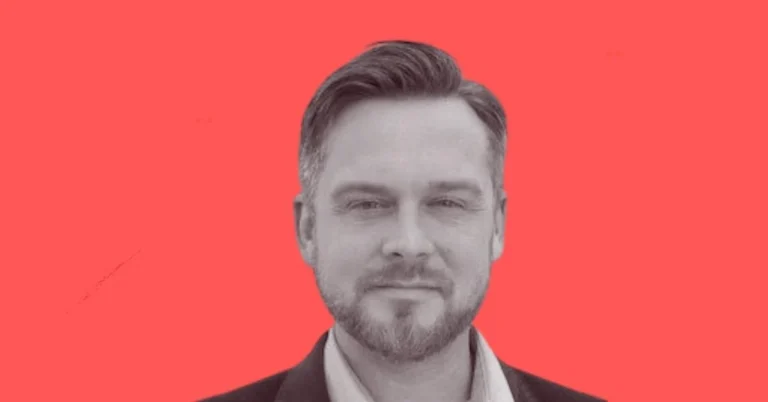
On the topic, Daniel Tutt presents himself as both a hermeneutical exorcist and an archaeologist. His recent book, How to Read Like a Parasite: Why the Left Got High on Nietzsche, dissects the philosopher’s poetically seductive style, revealing a reactionary core of ideas disguised as a ludic and Dionysian liberation.
For this issue of The Miskatonian’s interview section, we dig deeper into Daniel Tutt’s odyssey from working-class origins to the halls of academia, probing the dark allure of Nietzsche’s thought and its pernicious echoes in our fractured epoch.

What follows is a set of questions designed to unearth the abyssal tensions among class struggle, philosophical seduction, and the abuses of a thinker who promised transcendence but delivered chains.
Aleksandar ~ Your journey from a working-class background in Portland, Oregon, marked by manual labor and delayed academic pursuits, to the elevated realm of philosophical critique reads like a Nietzschean trial by fire. How did the shadow of class experience influence your path, and in what ways did it prepare you against the very elitism Nietzsche endorsed? Why did you decide to even incorporate the biographical into a philosophy book?
Daniel ~ My objective in invoking autobiography from the perspective of social class is not meant to focus on the difficulties of the experience of social class as something that should be fetishized. If anything, I invoked it because I think that we have forgotten how to even speak about social class in our lives and how it interacts with politics. Although this is a very small part of the book, my hypothesis is that by locating the antagonisms of social class and revealing how they shape so much of our lives and potential, we upset the harmony of liberal meritocracy. I have the sense that my story is like countless others, and in this way, to invoke autobiography is to elevate a political experience that is highly common yet so seldom addressed. In writing honestly about the setbacks, disadvantages, and struggles borne from social class, you are politicizing your experience in ways that could very well shape how people come to see social reality and class society. This was a primary aim of the tradition of socialist realism in art and literature, lest we forget.
My other aim was to upset the general left-Nietzschean outlook, and by extension the wider neoliberal embrace of identity politics, because it too is forged upon a denial of class struggle. The reasons for this are found in the core of Nietzsche’s thought. For example, I develop the thesis that Nietzsche’s perspectivism, one of the most important philosophical concepts at the heart of postmodern thought, is built around a conception of social conflict that attempts to mute and pacify class struggle.
Another reason I included the autobiographical portrait is that I wanted to incorporate Nietzsche’s idea, which was popularized by Lou Salomé, that, to paraphrase, “all philosophy is ultimately an expression of biography.” This is an example of what I mean by a “parasitic reading” in that my aim was to undercut the reactionary political thrust of Nietzsche’s thought, given that his use of autobiography is based around a valorization of aesthetic suffering, which is most often appealing to the elite and bourgeoisie. Much of my book examines how my views on Nietzsche shifted after becoming a socialist and developing class consciousness, and so I take some of Nietzsche’s methods and apply them in a different political direction than he would have been comfortable with.
My focus on the autobiographical has subsequently led me—after publishing the book and seeing how readers responded—to study the meaning of political biography in our own time. Marxism has a great tradition of political autobiography in the 20th century, from realist novelists like Agnes Smedley and Richard Wright, to Sartre in his magisterial studies of Flaubert and Genet. I think that in post-structuralist philosophy, the fusion of one’s autobiography with philosophy is typically categorized as “autotheory,” which refers to an attempt to include an element of the autobiographical as a subversive gesture against the domestication of otherwise abstract or obtuse theory. I am influenced by contemporary French writers who have used autobiography with a focus on social class, such as Didier Eribon and Édouard Louis – their works often reveal a profound alienation born from working-class experience, and they show how this experience is muted and not permitted to be expressed in liberal mainstream institutions.
In an American context, which I am most familiar with, the muting of social class is even more pronounced within liberal institutions and in the wider bourgeois culture than it is in France, and this is due, of course, to France’s far deeper socialist and communist history compared to America. I think that the experience of social class has remained a central political problem and scandal for bourgeois institutions, and this is not reducible to the generation-specific event of the economic crash of 2008, although that has only intensified matters. The truth is that the entire postwar period has witnessed class struggle, even in the so-called postwar Golden Age of capitalism, or the ‘Fordist period’ of capitalism starting in the late 1940s and running up to the late 1970s.
If a writer can locate the hidden antagonisms of the class experience that cannot be comfortably integrated into the wider liberal tableau of acceptable politics, they have harnessed something with great potential. It should be said that the power of class is a power that can be abused, not only by liberals who reject and condescend to class, but also by fascists who come to power by manipulating the working class. I situate Nietzsche as a thinker who straddles liberal and fascist politics and who is ultimately a thinker who helps keep the status quo intact. In my view, Nietzsche becomes one of the great intellectual antagonists to the socialist and Marxist tradition. My political perspective is that only Marxism can offer the practical, political, and intellectual compass for the left to remain true to egalitarian and emancipatory politics and not fall sway to reactionary individualism in either liberal or fascist forms.
Social class remains the locus of political struggle, and it shapes a good deal of our social reality even though liberal ideology has sought to make social class appear as only a passive element within the political situation. It must also be noted that the working class does not always experience the acuteness of its alienation and immiseration; there also needs to be a series of efforts in intellectual life to portray these political realities in art, philosophy, and literature. Capitalist politics, given that it is so dominated by liberal ideology, significantly affects our capacity to forge solidarities and to independently organize the working class because it tends to obscure social class and because its aims are geared towards the perpetuation of the existing division of labor. My view is pretty basic: I believe that class oppression must be addressed through a universal socialist politics, and I think that biographical accounts that center the effects of social class can be profoundly subversive to the hegemony of liberalism. This is not merely because class is exceptional or that the working class struggles in some intrinsically righteous way, it is because liberal ideology is formulated on a necessary denial of social class as a material element of our world. As I explain in my book, Nietzsche developed a philosophy that addresses class struggle by obscuring and muting its effects, and he does this with greater sophistication than most liberals.
Aleksandar ~ If I’m not mistaken, Nietzsche first captured your attention two decades ago during college, with the energetic force of Beyond Good and Evil. What initially drew you into his ideas? Was it the appeal of challenging modern conformity, or something more subtle, like a hidden excuse to tolerate societal injustices?
Daniel ~ My first exposure to Nietzsche was nothing less than electric. I was about 18 or 19 years old, and he hit me in a few different registers, the first being in the rhythm of his writings and aphorisms – it all felt so portable and personal. His books are something you can move around with, something that you take with you when you leave the house and read passionately whenever you have a moment to be in solitude. I discovered Nietzsche before I discovered Marx, and this was at a time when I was quite restless as I was dealing with the residual difficulties that came with leaving home and contending with significant family dysfunctions born from addiction, poor work prospects, and peripheral poverty.
The second way that Nietzsche captivated me was through his style of ellipsis and prophecy, which felt subtle but nevertheless urgent. Of course, to understand the basis of Nietzsche’s prophecy requires that you dig deeper into his works; it requires that you disentangle the “Nietzsche myth,” i.e., his profound cultural impact, from his philosophy. I wanted to understand what Nietzsche read, what his areas of concern were directed towards, and I wanted to distill his main ideas. Given that Nietzsche’s concerns are total in scope, touching on music, art, philosophy, politics, morality, and the very category of life and living as such, Nietzsche offered me a worldview and a perspective as a young person. For some time, that is what Nietzsche offered.
I will say that Nietzsche’s elitism and his outright support for cruelty did not directly imbue these sensibilities in me. I was too caught up in the transference to Nietzsche as a young person to really identify with his reactionary thought directly. If anything, the Nietzscheans that I read, like Deleuze, Foucault, and Baudrillard, helped me to see his cruelty as a metaphor and thereby to downplay his reaction; however, it was always in the background. I simply related to it as non-consequential to his thought. Because Nietzsche was my philosophical master, I had no way to truly challenge his overt reactionary views. It was only by reading Marx and Marxist philosophers like Georg Lukács, Geoff Waite, Domenico Losurdo and even some anarchist critics of Nietzsche like Kropotkin that I became disenchanted with Nietzsche. Only then could I develop a parasitic reading of Nietzsche.
Aleksandar ~ In your book, you argue that Nietzsche’s philosophy harbors a coherent, stealthy reactionary agenda, forged in the crucible of 19th-century class upheavals like the Paris Commune. How did these historical phantoms, manifesting as worker revolts met with aristocratic disdain, influence your decision to center him in your critique, rather than dismiss him as a mere relic of bourgeois anxiety?
Daniel ~ Nietzsche was not only a commentator on the class struggle in his time, but he also situates his philosophy and the creation of his concepts in a political cauldron that stretches from the time of Socrates to the present. Nietzsche sought to situate his thought not purely as a historian or philologist but as a philosopher-prophet who would come to shape the political conflicts of the coming 20th century, after ‘great socialistic wars’ as he says. It is not a coincidence that Bertrand Russell referred even to World War II as “Nietzsche’s war.” But while Nietzsche is deeply affected by the political struggle of his time, from the ending of chattel slavery, the post 1848 worker movements, the rise of imperialism and Bonapartism, to universal male suffrage, Nietzsche situates his advocacy of “great politics” to a future-oriented audience. Thus, the core of Nietzsche’s politics is found in the cultivation of a community of so-called ‘higher types’ who will be capable of facing a political future that must address the problems that massification has brought about. This great task will require the resolve to exert cruelty and punish the weak, the losers, and the low-born.
As I document in my book, Nietzsche’s concept of slave morality is frequently invoked in his work to refer directly to the conditions of the European proletariat. While he situates himself as “untimely,” this is a bit misleading in that Nietzsche is deeply affected by worker struggles in his time. In Sartre’s study on Flaubert, he argus that the Paris Commune created social effects which touched the entirety of the bourgeois class, and this meant even ostensibly apolitical writers and novelists. It goes without saying that Nietzsche was affected by such events given his political focus and ambitions. One of the arguments I make is that Nietzsche was deeply affected by the movements of the proletariat in his time, and his concepts, such as the pathos of distance and the eternal return, are best understood as a response to the class struggle.
Aleksandar ~ Nietzsche’s ideas, from the eternal return to the pathos of distance, seem to suggest promises of personal transformation amid societal decline. Yet you depict him as a disruptor of egalitarian ideals. Where do you notice his influence growing most threatening in modern discussions, is it perhaps in the empty empowerment of entrepreneurial self-help or the fractured identity politics of today’s activism?
Daniel ~ My contention is that Nietzsche lives within and across the political spectrum and that his influence is locatable and treatable once one knows how to detect it. Nietzscheanism has been with us for well over a century, and his thought has appeared in proto-fascist political tendencies beginning with Gabrielle D’Annunzio, the figure Mussolini referred to as a father of fascism, to reactionary liberal intellectuals today, such as Curtis Yarvin, to left-libertine figures such as Foucault and Deleuze. This spectrum may seem very differentiated in terms of ideological content and commitment, but the closer you get to its core, the less difference there is between left and right Nietzscheanism. It is not surprising that many Nietzscheans advocate for a “third way” beyond the left and the right. The common characteristics of Nietzscheanism entail the cultivation of an austere, minority-driven politics which is fundamentally hostile to the masses and typically to the working class as such. Dimitri Safronov, in his recently published dissertation, Nietzsche’s Political Economy, argues that a primary goal of Nietzsche’s political thought is to establish a social order where higher and lower types align with their physiological rank. To mix Nietzsche with capitalist politics often results in a profound retrenchment and support for the existing division of labor and other forms of existing hierarchy.
Aleksandar ~ The left’s intoxication with Nietzsche, as you diagnose it, stems from a “hermeneutics of innocence” that strips away his brutal defense of rank and hierarchy. How has this reading deformed progressive movements, turning tools of liberation into instruments of subtle domination?
Daniel ~ That’s true, however, the left’s infatuation with Nietzsche is not only reducible to a hermeneutical reading method. It is also a symptom of the overwhelming dominance of liberal forms of thinking class society. As I indicated above, because Nietzsche is so successful in excising class as an operator in his politics, his philosophy becomes attractive to petit-bourgeois philosophers who also wish to conceal or ignore the problem of social class. I would not say that the hermeneutics of innocence has ruined progressive movements; it has rather contributed to a different sort of Nietzsche for politics on the left, one that is less honest about Nietzsche’s core. It has produced an academic-oriented libertine Nietzsche who appealed to many within the New Left for the implicit radical individualism in Nietzsche’s austere, anti-masses politics. For the post-May ’68 left, Nietzsche has become a muse for overcoming the perceived bureaucratic inertia of state socialist projects in the USSR.
But one of my arguments is that the anti-socialist left that grew out of the 68 period has deeply regressed to become a self-defeating left. There is no longer a coherent left-Nietzscheanism in large part because the intellectuals who situated Nietzsche as an important thinker for the left back in 68 did so in a way that was highly uncritical towards radical liberal identity politics. I argue that left-Nietzscheanism is essentially defunct, though its legacy persists within the left. Nietzsche’s impact on the left deserves a thorough Marxist evaluation, and not only that; it also requires a new method for extracting insights from him, one that is rooted in historical materialism, not in postmodernist or post-structuralist methods. My work is in line with this effort.
Aleksandar ~ Consider Nietzsche’s concept of ressentiment: a simmering resentment that pacifies the oppressed while maintaining the elite’s cold indifference. In our time of growing divides—economic, cultural, and existential—how does this idea serve as a weapon against the working class, disguising itself as psychological insight?
Daniel ~ My chapter on ressentiment and social suffering is I think the most important thing that I have ever written on Nietzsche. I think that ressentiment is a fundamentally reactionary concept, but it is a very valuable one for bourgeois politics because in deploying this label, you gain the power to paralyze the class problem at the heart of capitalism. There is what I refer to as a “ressentiment complex,” which perpetuates a type of archaic identity politics avant la lettre in that the label tends to be applied to racial groups, classes, or ethnic groups. This has the tendency of racializing and thereby obscuring class resentments that are borne from wage labor, exploitation, and true racial conflict that is kicked up by capitalism. What the ressentiment complex does is it makes any expression of resentment effectively barred from being uttered or adequately processed. The Nietzschean treatment of ressentiment obscures a profound unwillingness to address the material roots of social suffering. I spend a good amount of time showing how the concept was in line with an attempt to aestheticize the suffering of the higher men at the expense of pacifying the social suffering of the laboring classes. But with that said, Nietzsche can still emerge as a perverse educator to socialism and the left in that he identifies the root of resentment, despite the fact that his aim is to obscure it. We need to encourage a vibrant, free exchange of complaints about the ills that capitalism bestows upon us, without that complaint causing us to lose our resolve or fall into passivity in the face of injustice.
Aleksansar ~ Nietzsche resigned his professorship at 38, retreating into Bohemian isolation amid illness and obscurity—much like your own delayed entry into academia after years in the NGO shadows. Do you see parallels in this voluntary exile, and how has it informed your call to read him “parasitically,” extracting value while expelling his toxic residue?
Daniel ~ This is an interesting question and almost impossible to answer! I see no parallels between Nietzsche and myself in terms of labor and class background. We could not be more different. I have fought with everything I have to have the time and the space to read and write, and I haven’t relied on the traditional university to do so. Nietzsche lived off a healthy pension after his retirement; he traveled widely in his early retirement, and he even played the stock market to great success. This allowed him to bankroll the literary production of his work, and he made plans to print close to 1 million copies of his books in six different languages before he retreated from public life in the late 1880s. So there are no parallels here of voluntary exile, and I would not consider myself an exile in any real way. I do, however, consider the work that I do in writing and public philosophy, and in hosting discussions on Marxism and philosophy on my show “Emancipations,” to be about carving out what I call a counterpublic to hegemonic left-liberalism. From within that space, I do not aim to be untimely, nor do I aim to saturate my aesthetics with Nietzschean aims whatsoever. Most everything I learn from Nietzsche I learn as a method for reversal and to parasitically redirect his insights, to apply them to ends that differ from his own.
Aleksandar ~ In a world where Nietzsche’s “death of God” echoes through nihilistic voids filled by consumerism and spectacle, where do you envision his role evolving? Will his ideas continue to haunt the left as a seductive monster, or can a Marxist reckoning, drawing from Lukács and Losurdo, finally lay the specter to rest?
Daniel ~ I think Nietzsche can only really become a muse for the left when the left is led by the middle class and petit bourgeois interests. Our present political situation requires that we turn to a serious proletarian-centered politics and that we re-introduce working class independence into our political imaginary and into our strategies on the left. I think that the Marxist readings of Nietzsche that I developed, and which have been with us for decades, have already helped the left to assess the shortcomings of the mid-20th-century embrace of Nietzsche within the left. I do not think that Nietzsche has a future with the left other than as a cautionary tale and as a perverse educator.
Aleksandar ~ The abuses of Nietzsche extend beyond politics into the personal: his seductive style lures the alienated into solitary grandeur, only to leave them isolated in a hierarchy of suffering. From your own seduction and subsequent awakening, what counsel would you offer readers tempted by his abyss, lest they gaze too long and become the very monsters he prophesied?
Daniel ~ I would recommend that readers familiarize themselves with Nietzsche’s work in its entirety. We don’t have all of Nietzsche’s work translated, but we have damn near all of it. It is possible to identify a center to Nietzsche. Whether we agree that his center is politics is a debate that is worth having, and I believe that the Marxist interpreters of Nietzsche that I work with have the best answer on what makes up his center, and that answer is reactionary politics. With that said, we must realize that Nietzsche is also highly alluring to young people, and as such, there is nothing that can stop that transference and love affair from happening, nor should we aim to stop people from reading Nietzsche. He can assist people in the ways of rugged, even non-commodified self-help. That process will continue for many years to come. But to seriously engage with Nietzsche’s politics, we must focus our analysis on the political foundation of his ideas, and we must identify the complicity that his thought has with the most reactionary forms of liberalism imaginable.