Home/Clifford Angell Bates

Clifford Angell Bates

Clifford Angell Bates

Clifford Angell Bates

A native of Rhode Island, who has been working at Warsaw University, Warsaw, Poland, since October 1999, Clifford is a political scientist specializing in political philosophy, political theory, and political history, with expertise spanning comparative politics, international relations, literature and politics, American Constitutionalism and Political Institutional History. His scholarly work examines the complex intersections between human biological nature, institutions, and environmental forces that shape humanity's political and social dynamics. Clifford is the author of two books: Aristotle's Best Regime (LSU Press, 2004) and The Centrality of the Regime for Political Science (WUW, 2016), As well as A Notebook for Aristotle's Politics (Lulu, 2022). His research combines classical political philosophy with contemporary insights into how state structures emerge and persist over time. Clifford is pursuing two major research projects: an investigation into the formation and temporal viability of state structures and concepts and an exhaustive commentary on Aristotle's regime science. His work explores how political and social phenomena influence biological imperatives, institutional frameworks, and environmental pressures. Throughout his academic career, He has focused on understanding how foundational political concepts emerge from the complex interplay between human nature and the structures humans create. Their research bridges classical political thought with modern state formation and sustainability questions. Clifford joined The Miskatonian as a Senior editor in December of 2024.

For Lefort, writing and language are not neutral communication tools but are imbued with political significance. They are symbolic practices that both reflect and shape the social order. In democratic societies, writing is of special importance because it embodies the principles of openness, debate, and contestation that define democratic life. In this context, writing becomes …

Claude Lefort and Pierre Manent offer contrasting yet complementary views on “the political form.” Lefort emphasizes the openness and indeterminacy of democracy, arguing that a healthy political form requires constant contestation and pluralism. Manent, by contrast, stresses the importance of stable political structures, particularly the nation-state, as essential for preserving a shared moral order and …

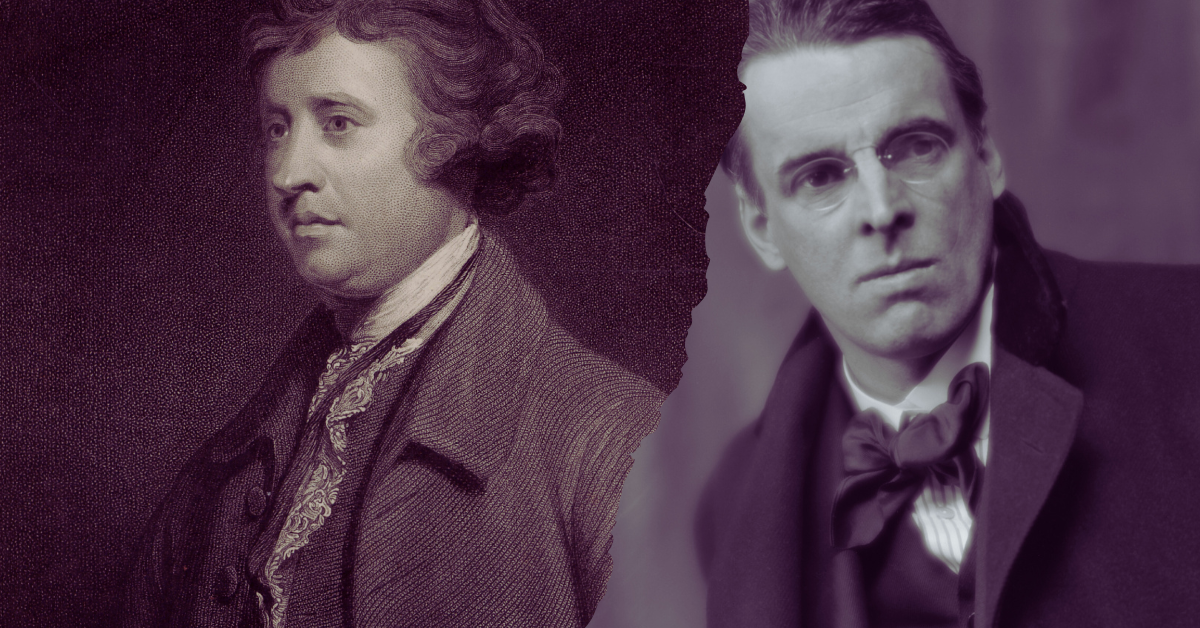
The contemporary debate about what works should and should not be included But the age of chivalry is gone. That of sophisters, economists; and calculators has succeeded, and the glory of Europe is extinguished forever. Edmund Burke's Reflection on the Revolution in France.       Western literature's canon is very heated.  In the debate, …

Join our Newsletter

Stay informed with regular updates and content.