Modernity, as it developed in the West, is largely characterized by a desacralized vision of the world and of time, which leads human beings to lose contact with the fundamental dimensions of existence, namely with the anthropological structure that, until then, had always defined man as a religious being. This rupture is not limited to …
Modernity, as it developed in the West, is largely characterized by a desacralized vision of the world and of time, which leads human beings to lose contact with the fundamental dimensions of existence, namely with the anthropological structure that, until then, had always defined man as a religious being. This rupture is not limited to the cultural sphere, nor can it be reduced to merely psychosocial interpretations; on the contrary, it possesses an ontological depth, affecting the very mode of being-in-the-world, to use the Heideggerian expression, of modern man.
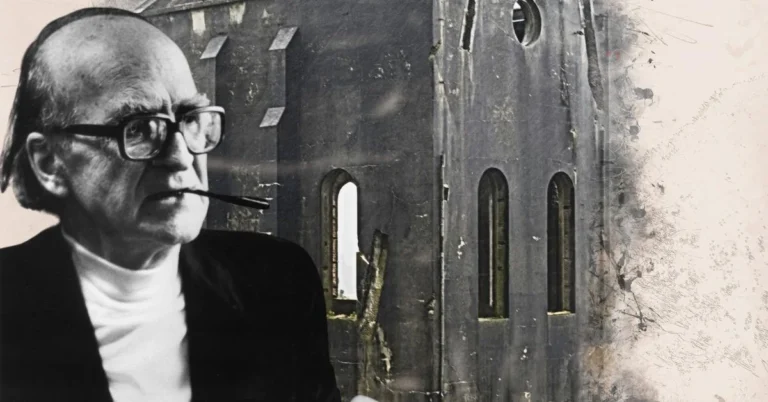
This transformation is extensively documented and analyzed by Mircea Eliade throughout his work, but particularly in The Myth of the Eternal Return, a book which, in many respects, can be read as an introduction to the philosophy of history 1. There, Eliade exposes the fundamental opposition between modern man, who lives in historical, linear and irreversible time, and man of traditional communities, whose existence is structured around a sacred experience of time.
It is therefore important to examine how many archaic communities – a designation frequently used by Eliade – did not give centrality to history as a linear succession of events. Instead, they exhibited a profound nostalgia for a periodic return to the mythical time of origins, to a primordial Golden Age. Consequently, they were organized according to a cyclical conception of time, in which rituals and myths allowed the constant reenactment of the founding moment, symbolically restoring order and the meaning of existence. This perspective is evident in the first chapter, Archetypes and Repetition, of the aforementioned work, where it becomes clear that these communities had a strong inclination to reject concrete historical time, even manifesting hostility toward any attempt to constitute an autonomous history, that is, a history devoid of archetypal regulation and without reference to a transcendent founding moment situated outside of history itself.
It is precisely at this point that the core of the issue lies, and one of the main reasons for the decline of Western thought, according to Eliade. Without reference to an original episode, man is deprived of access to an extramundane archetype – something that can be conceived as a plan, an image, or a form existing on a higher cosmic level – which allows the understanding and ordering of the physical plane according to a mythical model. The loss of this symbolic mediation entails a radical transformation of the experience of the world and of time, leading to an existence increasingly confined to historical immanence.
From this rupture, according to the Romanian author, arises the denial of any higher path by modern Western thought. This denial becomes particularly visible in certain post-Hegelian currents, notably Marxism and Fascism, whose approach centers on historical man, conceived as existing only insofar as he produces himself in and through historical processes. However, Eliade’s critique is not limited to an attack on Hegelian influences; it extends to the Western intellectual establishment itself, particularly over the last two centuries. Early in the book – in the Introduction written in Portugal in 1945 – Eliade notes that Western philosophy confines itself almost exclusively to its own tradition, ignoring, for example, the problems and solutions elaborated by Eastern thought. Thus, from the very beginnings of philosophy, thought privileged the man of historical civilization at the expense of the religious man of archaic communities.
Later, in The Sacred and the Profane, Eliade maintains that modern Western man experiences a kind of indisposition toward any manifestation of the sacred, no longer being attuned to the process of hierophany. Although he recognizes earlier signs of this deterioration in thought and the process of desacralization, Eliade considers that modernity, as previously noted, delivers the decisive blow. Consequently, a West that fully embodies the profane element emerges as a relatively recent phenomenon in the history of the human spirit, indeed, in the chapter The Desacralization of Nature, Eliade emphasizes that total secularization is precisely a new characteristic that came to define the entire experience of non-religious man, who can now inhabit only a cosmos perceived as chaotic. This chaos arises precisely because, by adopting exclusively a linear and non-cyclical conception of time, together with illusory notions of progress, man becomes restricted both in the notion of destruction and in its subsequent periodic recreation, elements that fundamentally define much of the ritual practice.
So what, then, is to be done? How will modern man overcome his current, chaotic condition? This requires the shedding of modernity and a reintegration into sacred time. Modern man must realize that he does not exist as a step in the aforementioned arbitrary march of progress, but rather, he is an inorganic anomaly that cannot truly exist. The effect of Eliade’s thought on postmodernism is such that it compels man to rediscover his original mode of being. It is to understand man as a microcosm 2. The existentialism of man as “just” man awaits its fulfillment in archaic myth. This is done by inculcating the transcendent element, whereby man is given a meaning and a purpose that is from a higher plane of existence. Man escapes his own condition and historical time by participation in the myths. Participation in the myths brings man into the illo tempore, the mythical time of the gods, and thus his existence is justified.
Eliade advocates for the “re-opening” of man to the world 3. Modern man, such as he is, is closed off to the world because he has rejected any higher metaphysical values than what he himself generates. What we have discovered, after the incense offered to the altar of Progress dissipated, is that man cannot generate metaphysical value completely on his own. There exists an openness of being, where archaic man lived on two planes: one, the material world is informed by his immediate surroundings. The second plane being the religious one, where man and his surroundings are given meaning and value from the transcendent. To know the world, to know that it is full of religious meaning, is to know what it is to be fully human. This is the return to microcosm, the rejection of the profane and the embracing of the sacred.
To drive the point home, let us look at the condition of modern man. How many things does modern man “do” that are essentially profane? How many mundane acts are done without any religious meaning or significance? If humanity truly comes into its own when it is open to the sacred and the transcendent, then what is a closed-off man? What is modern man? Modern man is not fully human. This, perhaps, is one of the most significant conclusions to be drawn from the life and works of Mircea Eliade. He offers a different vision, a vision for a post-modern man, fully integrated into archaic humanity. This man will not proclaim the death of the gods, but of their return.
Written by Guilherme Jose & David Banica
Join the Club
Like this story? You’ll love our monthly newsletter.
Thank you for subscribing to the newsletter.
Oops. Something went wrong. Please try again later.